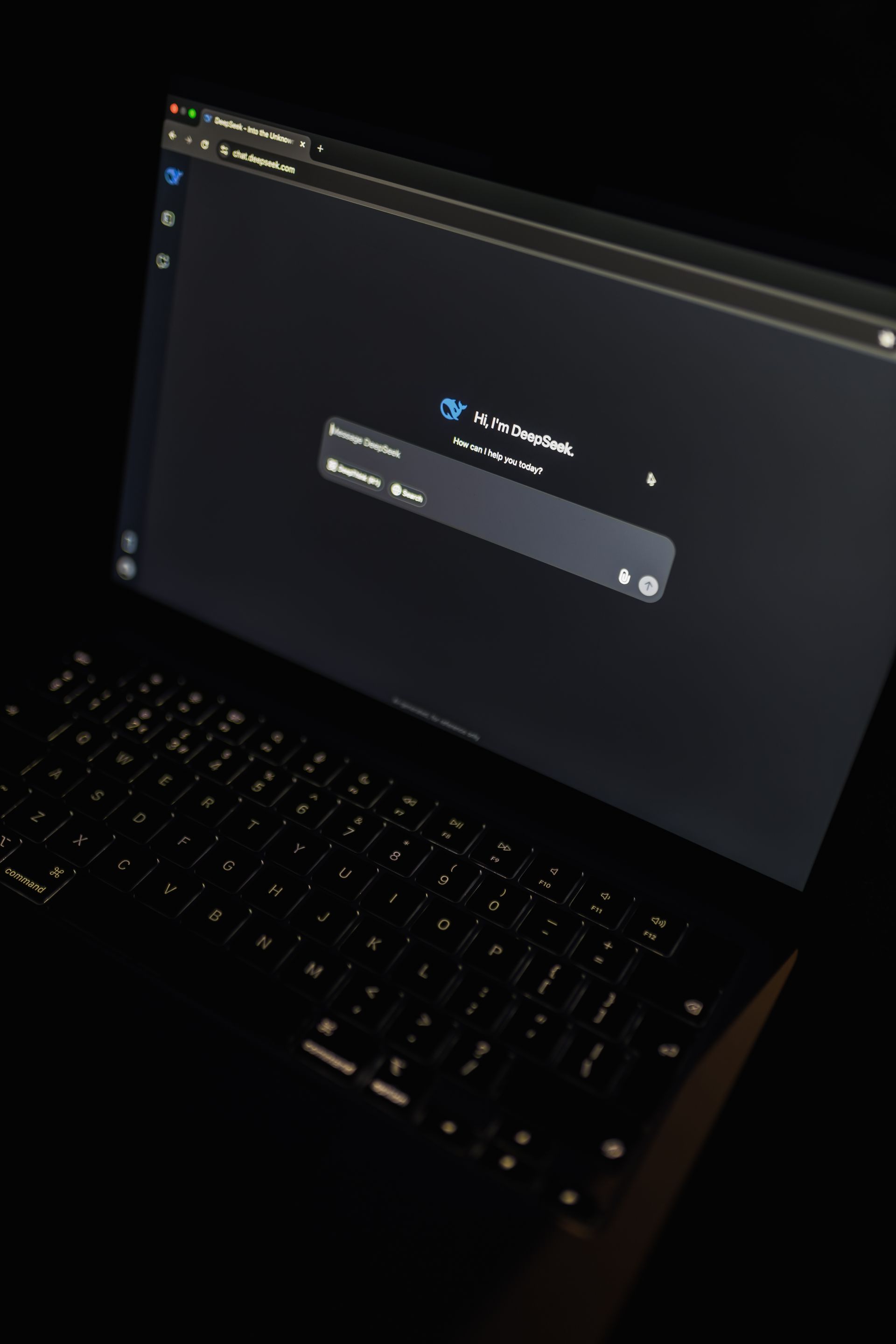
OpenRouter aggregates 400+ models behind one API. Weekly token volume reflects what teams actually route in production—not what wins a leaderboard demo. This post reads the June 2026 Top10 through the lens of Claude, Gemini, DeepSeek, and Kimi.
There is no single “winner” in the headline: some teams optimize for volume, others for unit cost, others for who still gets called on the hardest 5% of tasks. The tables below lay out those lenses so you can map them to your stack.
1. Why OpenRouter?
Benchmarks measure single-shot ceilings. OpenRouter measures who is getting API calls—IDE defaults, agent-framework routers, SaaS fallbacks—all show up in the weekly token curve. Same logic as the compute infrastructure war: in 2026 the fight is not just model scores but who can deliver tokens reliably and cheaply.
Before you read the rankings, three caveats (multi-turn agents amplify price gaps—see agent billing):
| Assumption | What it means |
|---|---|
| Token ≠ revenue | Cheaper models naturally accumulate more tokens |
| ≠ global API volume | ChatGPT, Azure, and on-device traffic are not in this chart |
| Agents amplify spreads | Multi-round tool calls multiply per-token price differences |
2. Vendor Top10 (June 2026)
Figures come from OpenRouter public Rankings plus third-party tracking (OfficeChai, Digital Applied, etc.) of weekly platform tokens. Top10 vendors total roughly 19T tokens/week; exact numbers move week to week—treat the official page as source of truth.
This table answers “where is the traffic?” If you route APIs instead of shipping a consumer app, vendor share is a better procurement signal than any benchmark.
| # | Vendor | Representative models | Share | Positioning |
|---|---|---|---|---|
| 1 | DeepSeek | V3.2 / V4 | ~16.3% | Volume leader; default for agent batch work |
| 2 | Anthropic | Claude Sonnet / Opus 4.x | ~15.5% | Premium retention on hard tasks |
| 3 | Gemini 3.x | ~13.2% | Long context + ecosystem distribution | |
| 4 | OpenAI | GPT-5.x | ~8.7% | Strong brand; OpenRouter share slipping |
| 5 | Xiaomi | MiMo-V2-Pro | ~8.6% | Low-price volume play |
| 6 | Tencent | Hy series | ~7.8% | Coding / agents |
| 7 | MiniMax | M2.5 / M2.7 | ~7.2% | Agent-native; OpenClaw-era surge |
| 8 | OpenRouter | Platform aggregate | ~5.9% | Default routing / free tier |
| 9 | Qwen | Qwen 3.6 Plus | ~4.7% | Open weights + cloud deploy |
| 10 | Moonshot | Kimi K2.x | ~3–5%* | Single model often Top10; vendor share volatile |
* China-origin vendors in Top10 combined ~44%+. Kimi can hit #2 by model in a given week while vendor share stays below the top three.
The top four—DeepSeek, Anthropic, Google, OpenAI—account for over half of traffic; from #5 onward you get volume chasers like Xiaomi, Tencent, and MiniMax. For most teams, the practical choice set is top four + Kimi.
3. Model-level Top10 (2026 Q2)
Vendor share shows where money flows; model rankings show which model ID gets invoked. One vendor often places two tiers (Sonnet + Opus, Gemini Pro + Flash) on the same chart—pick the ID, not just the brand.
| Rank band | Model | Vendor | Typical use |
|---|---|---|---|
| 1–2 | MiMo-V2-Pro / MiniMax M2.5 | Xiaomi / MiniMax | Ultra-cheap agent batch |
| 2–4 | Claude Sonnet 4.6 | Anthropic | IDE agent default |
| 3–5 | DeepSeek V3.2 / V4 | DeepSeek | Reasoning / code / self-host option |
| 4–6 | Qwen 3.6 Plus | Alibaba | Multilingual MoE |
| 5–7 | Claude Opus 4.6 / 4.7 | Anthropic | Architecture / security review |
| 6–8 | Gemini 3.1 Pro / Flash Lite | Very long context / multimodal | |
| 7–9 | Kimi K2 / K2.5 / K2.6 | Moonshot | Agent parallelism / coding |
Kimi’s usual path is “single model cracks Top10, vendor share lags”—a breakout SKU story. DeepSeek is the opposite: a product line that stays on the board. Next, all four in one comparison table.
4. Four-way compare: Claude vs Gemini vs DeepSeek vs Kimi
| Dimension | DeepSeek | Claude | Gemini | Kimi |
|---|---|---|---|---|
| Vendor share | ~16.3% (#1) | ~15.5% (#2) | ~13.2% (#3) | ~3–5% (#10) |
| Core edge | Cost per unit of intelligence | Teams still pay premium on hardest work | Long context + GCP ecosystem | Agent parallelism / coding spikes |
| Typical fit | Bulk tool calls, log summarization | Architecture calls, security review | Million-token docs, multimodal | Silicon Valley agent stacks, multi sub-agent |
| Relative gap | Compliance / latency / English creative | Unit price | GitHub-coding hype below Sonnet | Share swings; version-chasing risk |
| “Winner” tag | Volume champion | Premium and trust | Distribution and default option | Agent-coding breakout |
Docs: Claude · Gemini API. None of the four dominates every axis—DeepSeek wins volume, Claude wins willingness to pay on hard tasks, Gemini wins ecosystem defaults, Kimi wins burst adoption in agent-coding circles.
5. “Real winner” by which ruler?
| Lens | Leader |
|---|---|
| Token share (routing vote) | DeepSeek > Anthropic > Google |
| Price × share (revenue proxy) | Anthropic, Google may flip the order |
| Hardest 5% of tasks | Claude Opus / Gemini Pro |
| Agent batch cost | DeepSeek, MiniMax, Kimi, MiMo rotation |
Same chart, three audiences: finance reads price × share, engineering reads who survives the hardest tasks, ops reads who is cheapest at agent scale. Those lines diverge—that is why Top10 is worth a monthly refresh.
6. Layered routing reference
Stop arguing who is #1; split by task tier. The table below is a common traffic split given June 2026 Top10 data. For compliance-sensitive work, swap in direct API or self-hosted weights.
| Task tier | Suggested models | Traffic share |
|---|---|---|
| Light / sub-agents | DeepSeek Chat / Gemini Flash Lite / Kimi K2 | ~80% |
| Day-to-day coding | Claude Sonnet 4.6 / DeepSeek V3.2 / Qwen 3.6 | ~15% |
| Architecture / review | Claude Opus 4.6 | ~5% |
| Very long / multimodal | Gemini 3.1 Pro | On demand |
OPENROUTER_MODEL_FAST=deepseek/deepseek-chat
OPENROUTER_MODEL_CODING=anthropic/claude-sonnet-4.6
OPENROUTER_MODEL_HARD=anthropic/claude-opus-4.6
OPENROUTER_MODEL_LONG=google/gemini-3.1-pro
Pair with Model Routing fallbacks so a 429 on the primary model degrades gracefully instead of killing an agent pipeline. Practical rollout: run a fixed eval set (10–20 real tasks) for a week, log pass rate and token cost, then lock the ratios above—far more reliable than picking from the leaderboard.
Solo devs can start with two tiers: Sonnet or DeepSeek for daily work, Opus for review. Teams add Gemini for long docs and Kimi for multi-agent subtasks. Revisit the routing table monthly against Rankings—a new release can reshape Top10 in one to two weeks.
7. Three common misreads
| Misread | Reality |
|---|---|
| DeepSeek #1 = Claude lost | 80% sub-tasks on DeepSeek + 20% Opus review—they complement |
| Kimi in Top10 = all-in Kimi | Lock model ID + eval; do not chase the brand |
| OpenRouter = global market | Reflects API / agent developer routing only |
Misreads usually come from treating “#1 this week” as total victory. DeepSeek and Claude both sit in the top three on OpenRouter—developers are paying by task tier, not picking sides.
8. FAQ
Six high-frequency selection questions, kept short—confirm model IDs and pricing in the OpenRouter console.
| Question | Short answer |
|---|---|
| Default for a solo dev? | Coding: Sonnet 4.6 or DeepSeek V3.2; save money: Flash Lite |
| OpenRouter vs direct? | OpenRouter for dev aggregation; direct for production SLA / compliance |
| Is DeepSeek just volume gaming? | Run your own eval for a week; ignore global totals |
| Kimi vs DeepSeek? | Multi sub-agent experiments → Kimi; stable low cost → DeepSeek |
| Is Gemini worth betting on? | Already on GCP / need long context → yes; GitHub-centric coding only → Sonnet/DeepSeek |
| How fast does data change? | Rolling 7 days; new models can reshape Top10 in 1–2 weeks |
9. Closing
Back to the headline: DeepSeek leads on volume, Claude holds premium, Gemini rides ecosystem, Kimi spikes in. OpenRouter Top10 shows a layered market—the teams that win write routing into architecture and choose with tables, not slogans.
Next step: open Rankings, map your task types, pick two tiers from the four-way table for A/B, and document the result in your team’s model-routing spec. The chart will move; tiered routing will not.
Don't waste routed tokens on a flaky execution environment
Model routing cuts L2 API cost, but when agents sleep on a laptop, queue in CI, or lose cache, full reruns burn the savings back at L3/L4. Nuvcloud M4 Mac mini gives always-on macOS with SSH/VNC—built for long-running OpenClaw, Claude Code, and similar agent stacks.
Try a daily rental with OpenRouter tiered routing on real agent tasks, then compare token bills to total TCO—see pricing.